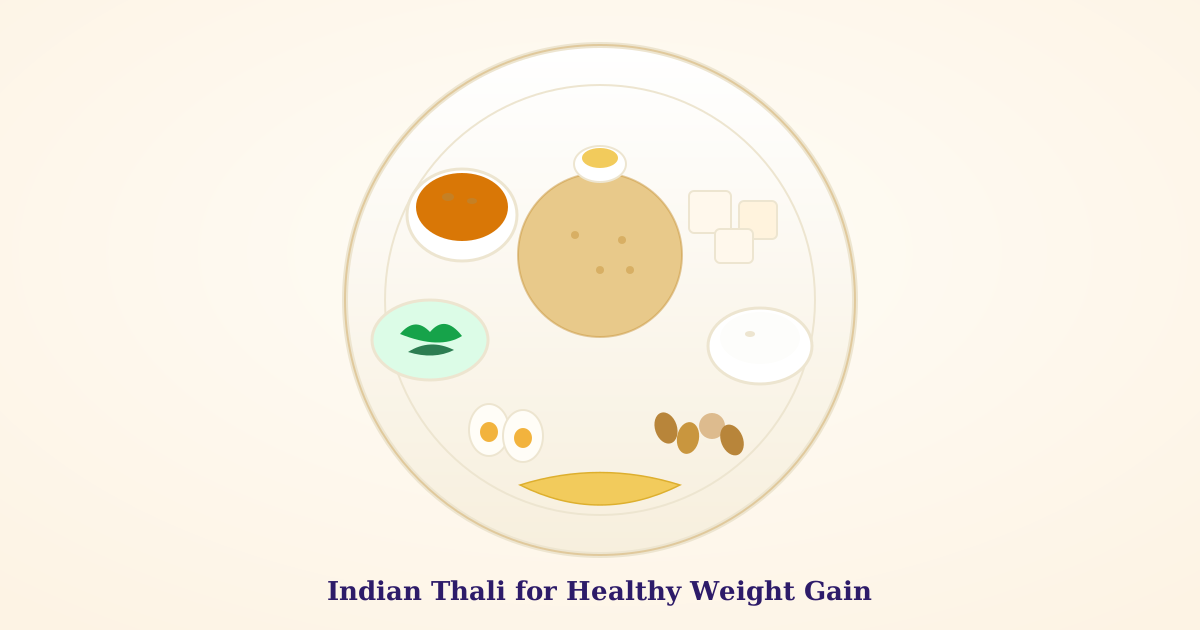
Healthy weight gain means building strength, not only adding a number to the scale. In an Indian kitchen that is fuller bowls of dal and rajma, paneer, curd and milk, eggs or fish, soaked chana and nuts between meals, and a spoon of ghee alongside the protein rather than in place of it.
Why Weight Gain Is Hard to Talk About in India
Almost every conversation around food in India is about losing weight. If you are on the other side of that, trying to gain weight and not managing to, it can feel like there is no advice made for you at all. Relatives keep telling you to eat more ghee. Friends assume you must be eating too little, even when you eat a full plate at every meal. And most of what you find online is written for someone trying to lose weight, not gain it.
Being consistently underweight is not just a look you dislike in the mirror. It comes with real, everyday effects: low energy, catching colds more often, feeling cold when others do not, hair that will not grow past a certain length, and for women, periods that can become irregular when the body is not getting enough to work with. None of this is fixed by simply piling more food on the plate. It is fixed by eating in a way that gives the body a reason to build, not just a reason to store.
Healthy Weight Gain vs. Fat Gain: What Is the Real Difference?
This is the one idea that changes everything else in this guide, so it is worth slowing down for. Weight gain and fat gain are not the same thing, even though the scale cannot tell them apart.
Fat gain is what happens when you eat more of anything, especially fried food, sweets, and refined carbs, without giving your body a reason to use that extra food for anything. The number on the scale goes up. Strength does not. Energy does not. Clothes get tighter around the stomach specifically, while arms and legs often stay thin.
Healthy weight gain is eating a little more of the right foods, spread through the day, alongside some regular movement that asks your muscles to work. The number on the scale still goes up, but so does strength, so does energy, and the weight sits differently on the body because a good part of it is muscle, not just stored fat around the middle.
Fat gain is eating more and doing nothing with it. Healthy weight gain is eating more and giving your body work to do with it.
Signs You Are Gaining the Wrong Way
It helps to know what the wrong kind of weight gain looks like, so you can course correct early instead of six months in.
- Weight only around the stomach, while arms and legs stay just as thin as before.
- No real change in strength. Stairs, carrying groceries, or a full day of work still feel just as tiring as they did before you gained weight.
- Energy that dips rather than improves, especially a heavy, sleepy feeling after meals.
- Weight that came mostly from fried snacks, sweets, or sugary drinks, rather than regular meals with dal, paneer, curd, and vegetables.
If most of this sounds familiar, the fix is not to eat less. It is to change what and how you are eating, and to add some movement that gives your muscles a reason to grow.
High Protein Indian Foods for Weight Gain
Nothing here needs to be bought from a special store. This is the food most Indian kitchens already have, used with a little more intention.
A Desi Diet for Weight Gain That Still Feels Like Home Food
You do not need protein powders or imported foods to gain weight. A desi diet for weight gain is the same roti, dal, sabzi, curd and paneer you already eat, served in fuller portions, with a protein in every meal and something extra added between meals rather than skipped. The lists below are exactly that, ordinary home food used with intention.
Vegetarian sources
- Dal and rajma: a full bowl at both lunch and dinner, not a thin serving on the side.
- Paneer: in sabzi, grilled, or simply pan fried with a little ghee.
- Curd and milk: a bowl of curd with meals, and a glass of milk, ideally with a banana or a spoon of peanut butter blended in.
- Besan: as chilla, in kadhi, or added to sabzi for extra protein without much extra volume.
- Soaked chana, rajma, and peanuts: a small bowl as a snack instead of biscuits or namkeen.
- Nuts and seeds: almonds, walnuts, pumpkin seeds and flax seeds, soaked overnight if that suits your digestion better.
Non-vegetarian sources
- Eggs: whole eggs, not just whites, unless a doctor has told you otherwise.
- Chicken and fish: grilled, curried, or roasted rather than deep fried, so the extra oil is not doing all the work.
Good fats and everyday extras
- Ghee: a spoon on dal, roti, or rice, useful but not the whole strategy on its own.
- Bananas and dry fruit: an easy way to add calories without filling up on volume alone.
- Full fat milk: rather than the diluted or low fat versions, unless advised otherwise.
Ghee helps, but a family telling you to eat more ghee and nothing else is only giving you half the answer. Extra fat without extra protein and without any movement tends to become the stomach-only weight gain described above. Ghee works best alongside protein at every meal, not instead of it.
Oats for Weight Gain, and Whether You Need a Protein Powder
Oats are one of the easiest weight gain foods to add to an Indian kitchen, because they need almost no extra effort. A bowl of oats cooked in full fat milk, with a spoon of peanut butter, a chopped banana, and a small handful of nuts, turns a light breakfast into a proper meal that also carries real protein. Oats can also sit alongside your usual poha or paratha rather than replacing it, as one more easy way to fit in the extra food a weight gain plan needs.
Protein powder for weight gain is not compulsory. If your meals already carry dal, paneer, curd, and eggs at regular intervals, food alone is usually enough. Where it helps is when your appetite is small and you genuinely cannot eat another full meal, a protein shake between meals can add calories and protein without needing to sit down to a plate again. This applies just as much to women as men. A weight gain protein powder for women works the same way, it simply fills the gap when appetite, not intention, is the limiting factor, and it works best added on top of regular meals rather than in place of them.
Muscle Building Basics for Beginners
You do not need a gym membership or complicated equipment to start. What you need is a reason for your body to use the extra food you are eating, and that reason is muscle work done regularly.
- Start simple: bodyweight squats, push-ups against a wall or the floor, and standing up from a chair repeatedly are enough to begin with.
- Be consistent, not intense. Three sessions a week, twenty to thirty minutes each, done regularly, works better than one exhausting session and then a week off.
- Spread protein through the day. A little protein at every meal helps your body use it, rather than one large protein-heavy meal and very little at the others.
- Give it time. Real, visible muscle gain takes a few months of consistent eating and movement together, not a few weeks.
If you already go to the gym and are still not gaining weight, the most common reason is simply not eating enough, especially not enough protein, to support the training. Training tells the body to build. Food is what it builds with.
Weight Gain and Lean PCOS: Why It Needs a Careful Approach
If you are a thin woman who has been told to "just gain weight" as part of managing PCOS, this section matters for you specifically. Many women with lean PCOS are already at a normal or low weight, and their PCOS is not driven by extra fat at all. It is driven by stress hormones and the adrenal glands, not by being underweight.
For lean PCOS, weight gain still needs to be steady and food based rather than sudden, fried, or sugar heavy. Skipping meals, crash eating, and then overcompensating with fried snacks raises cortisol, and higher cortisol tends to make PCOS symptoms worse, not better, even while the number on the scale goes up. The full explanation of why lean PCOS works differently, including which foods actually help, is covered in the lean PCOS guide.
I had a client with lean PCOS who had been told for years to just eat more, and every time she tried, her symptoms flared instead of her weight moving in a good direction, because piling on food the ordinary way was the wrong instruction for her particular body. Once we slowed things down and built her plate around steady, food based meals rather than a rush to gain, her weight started moving in the right direction without her symptoms getting worse. With another client who also had lean PCOS and was underweight, I began from that same logic, steady and food based rather than rushed, but not the same plan, and her body needed an entirely different pace and mix of foods, and real trial and error, before it responded, because her digestion and root cause were not quite the same as the first client's despite looking similar on paper. It is why weight gain with lean PCOS is never a simple eat more instruction, the reasoning can travel between two women, but the actual plan almost never does.
The goal is not simply a higher number. It is regular meals, protein at each one, and gentle resistance movement rather than intense cardio, so weight gain happens alongside better hormone balance instead of working against it.
Is There a Natural or Ayurvedic Way to Gain Weight?
Many people searching for weight gain products want something that feels natural rather than a tub of powder. The honest answer is that food, used with intention, already is the natural approach: ghee, milk, dates, dry fruit, and banana are the same ingredients most Ayurvedic weight gain suggestions are built around anyway. Where Ayurveda adds real value is in habits like eating at regular times, chewing slowly, and not overloading the stomach with fried food right before bed, all of which help the body actually absorb and use what you eat.
Be cautious with packaged "ayurvedic weight gain" products or tablets bought online without guidance. Some are simply mild appetite stimulants, and a few contain ingredients that are not clearly listed. If you want to try a herbal or ayurvedic route, it is worth checking with a qualified practitioner rather than picking a product off a shelf, and pairing it with the same food based approach described in this guide.
Vajan Badhane Ka Sahi Tarika
Bahut se log sochte hain ki vajan badhane ke liye bas zyada khana kha lena kaafi hai, lekin asli farak tab aata hai jab khane mein protein bhi ho aur body ko thoda kaam bhi milta rahe. Sirf ghee ya tel se pet nikal sakta hai, lekin taaqat nahi badhti. Dal, paneer, dahi, anda aur nuts ko har meal mein shaamil karein, aur din mein 5 se 6 baar thoda thoda khayein, bajaye 2 ya 3 bade meals ke. Halki resistance exercise, jaise squats ya push-ups, is process ko kaafi behtar banati hai.
For Indians Living Abroad (NRI)
This same approach works whether you live in Bhopal or in the USA, UK, UAE, Canada or Australia. Dal, paneer, curd, eggs, nuts and whole grains are available almost everywhere Indians live abroad, and where a specific ingredient is harder to find, there is usually a close substitute. Consultations happen over video call, so an Indian style weight gain plan built around your kitchen abroad is entirely possible without visiting Bhopal in person.
Frequently Asked Questions
📖 Where to Go Next
Lean PCOS Guide
Why thin women get PCOS, and why weight gain needs a careful, adrenal-aware approach here.
Read Guide → DietPCOS Diet India
The detailed Indian food list and meal structure for hormonal health.
Read Guide → ThyroidThyroid Diet Plan India
If weight gain feels unusually stubborn, an underactive thyroid could be part of the picture.
Read Guide → Weight ScienceWhy Dieting Isn't Working
The science of eating right, useful whichever direction you are trying to move the scale.
Read Guide → Work With MeSee Plans & Fees
What a consultation includes, what the guided programmes cover, and what each one costs.
View Pricing → Blood SugarDiabetes Diet Plan India
What to eat for steady blood sugar, and how it connects back to insulin resistance.
Read Guide → InsulinInsulin Resistance Hub
The root cause behind most PCOS, weight and blood sugar struggles, explained in full.
Read Guide → Hindiइंसुलिन रेजिस्टेंस (हिंदी)
The same insulin resistance guide, in Hindi.
Read Guide → Storyनमिता की कहानी
Namita's own insulin resistance story, in Hindi.
Read Guide → StoryMy Insulin Resistance Story
Namita's own experience with insulin resistance, in her words.
Read Guide → Bone HealthOsteoporosis in Indian Women
Calcium rich Indian foods and why bone health matters earlier than most women think.
Read Guide → SkinPCOS & Acne
Hormonal jaw acne, the androgen connection, and foods that help clear skin.
Read Guide → HairPCOS Hair Loss
Crown thinning, the hormone behind it, and nutrition that helps regrowth.
Read Guide → HindiPCOS क्या है (हिंदी)
PCOS symptoms, types and the Indian diet approach, in Hindi.
Read Guide → CyclesIrregular Periods & PCOS
How cycle regularity comes back through food and lifestyle.
Read Guide → WeightPCOS Weight Loss
Why standard diets fail with PCOS, and the insulin first approach that works.
Read Guide → Main GuidePCOS Complete Guide
The full pillar guide covering all PCOS types, causes and the Indian diet approach.
Read Guide → PMOSPCOS Renamed to PMOS
What the May 2026 rename means, and what does not change for your care.
Read Guide → Hindiवजन कम करें, सही तरीका
Weight loss, in Hindi, with hormones and food explained together.
Read Guide →If you are new here, start from the home page to see how the consultations work, or go straight to plans and fees.
← Back to all articles- Bandyopadhyay S. et al. (2020). Metabolic availability of lysine in milk and a vegetarian cereal-legume meal determined by the indicator amino acid oxidation method in Indian men. The Journal of Nutrition, 150(10), 2748–2754. PubMed →
- Gardner H. et al. (2025). Risk factors for the intra-individual double burdens of malnutrition among reproductive-age women in India. BMJ Public Health, 3(2), e002730. PubMed →
- Millward D.J., Jackson A.A. (2004). Protein/energy ratios of current diets in developed and developing countries compared with a safe protein/energy ratio. Public Health Nutrition, 7(3), 387–405. PubMed →
- World Health Organization. (2024). Malnutrition. WHO Fact Sheet →

This article is nutrition guidance, not medical advice. Namita is a Certified Nutrition Coach, not a doctor. If weight loss or gain is sudden or unexplained, please speak to your doctor first.