What Is Chronic Dieting and Why It Fails?
Chronic dieting is the repeated pattern of reducing food intake to lose weight, followed by weight regain often ending at a higher weight than before. It fails not because of lack of willpower but because the body actively defends against calorie restriction using hormonal and metabolic mechanisms: slowing metabolism, increasing hunger hormones, and burning muscle instead of fat. For Indian women, who already carry a higher baseline risk of insulin resistance and are frequently protein-deficient, calorie restriction alone is particularly counterproductive.
You have tried eating less. You skipped meals, counted calories, avoided rice, gave up chai. And yet the weight came back. Or never left. You are not failing. Your biology is working exactly as it was designed to work. The problem is not your willpower. The problem is that dieting was never the right strategy.
Signs That Your Diet Approach Is Not Working
- Weight loss stalls after 2–4 weeks despite continuing restriction
- Constant hunger, cravings, and inability to feel satisfied after meals
- Fatigue, brain fog, or low energy throughout the day
- Hair thinning or increased shedding during or after dieting
- Irregular periods or missed cycles during active calorie restriction
- Weight rebounds quickly and exceeds original weight after stopping
- Cold hands and feet, slow digestion, low mood (signs of metabolic slowdown)
Tired of diets that don't last?
Get a personalised nutrition plan built around Indian food no starvation, no crash diets, just sustainable results.
🌿 Book Free Discovery CallWhy Diets Always Fail: The Biology Nobody Tells You
The Calorie Restriction Trap: Why Eating Less Backfires
Every diet works for the first 2 to 4 weeks. You lose weight, feel motivated, and think you have finally worked it out. Then the weight loss stalls. Energy drops. Hunger becomes relentless. And within weeks or months, the weight is back sometimes more than before.
This is not a willpower problem. Your body is running a survival programme built over millions of years of evolution, designed to protect you from starvation.
The Dieting Trap: When you eat less, your body does not burn fat smoothly. It interprets the calorie drop as a famine signal and activates a cascade of hormonal and metabolic responses that make fat loss progressively harder with every passing week.
What Your Body Does When It Detects a Famine
A landmark study published in the New England Journal of Medicine (2011) followed contestants from The Biggest Loser for 6 years after the show. Despite maintaining reduced body weight, their metabolisms had slowed by an average of 704 calories per day compared to people who had never dieted. Their hunger hormones remained elevated for the entire 6-year follow-up period.
Why Willpower Is Not the Problem and Science Proves It
The most damaging idea in weight loss culture is that people who regain weight lack discipline. Research has disproved this. When your body drives ghrelin up by 24%, resisting food is not a character failing, it is fighting a biochemical signal as powerful as thirst. You would not blame someone for feeling thirsty after exercise. The same logic applies to hunger after dieting. Understanding this is the starting point for doing something that actually works.
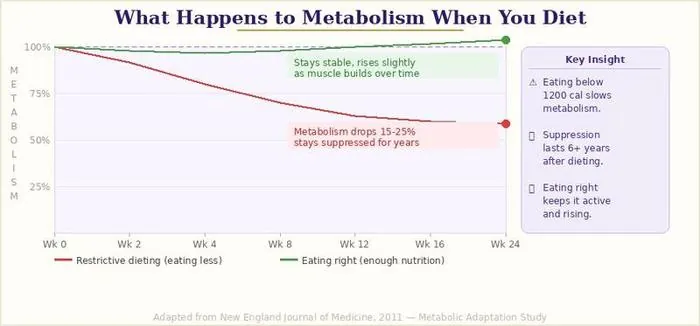
Fothergill et al. (2016) followed contestants from a major weight-loss competition for 6 years and found their resting metabolic rate stayed suppressed well below what their body weight alone would predict, direct evidence that restrictive dieting causes a lasting metabolic slowdown, not just temporary hunger. Read on PubMed →
Adaptive Thermogenesis: How Your Body Deliberately Slows Metabolism
Adaptive thermogenesis is the most important concept in weight loss that almost nobody discusses. It is how your body deliberately burns fewer calories in response to reduced food intake.
How It Works Step by Step
You Cut Calories
You reduce food intake by 500 to 800 calories. The body detects an energy deficit within 3 to 5 days.
Thyroid Hormones Drop
Your thyroid reduces production of T3 and T4 hormones. These hormones control metabolic rate. Less T3 means your body burns fewer calories at rest. This begins within 1 to 2 weeks.
Sympathetic Nervous System Slows Down
Your nervous system reduces energy expenditure in all non-essential processes. Body temperature drops slightly. Digestion slows. Heart rate lowers. The body becomes maximally efficient at using minimal energy.
Mitochondria Become More Efficient
Your cells actually rewire themselves to extract more energy from less food. The same meal that once produced 400 units of energy now produces 500. Your body is doing more with less.
Fat Regain Accelerates After Dieting Stops
When normal eating resumes, the suppressed metabolism means your body now stores fat far faster than before the diet. This is why post-diet weight regain is almost universal and why many people end up heavier than when they started.
Rosenbaum and Leibel (2010) demonstrated that adaptive thermogenesis reduces total energy expenditure by 300 to 500 calories per day beyond what body weight loss alone would predict. This means the body is actively compensating by burning significantly less than expected for its new smaller size. This metabolic suppression persists long after the diet ends.
The key insight: Adaptive thermogenesis is NOT triggered by eating the right nutrients in adequate amounts. It is specifically triggered by calorie restriction and nutrient deficiency. When you eat enough of the right foods, your metabolism stays high and your body has no reason to activate survival mode.
How Long Does Metabolic Damage from Dieting Last?
This is the question nobody asks before starting a diet. The Biggest Loser study found metabolic suppression persisting at full intensity 6 years after the diet ended. Participants burned 704 fewer calories daily than expected for their body size without ever restoring it through normal eating. This is why serial dieters find each attempt harder than the last. Every restriction cycle lowers the metabolic baseline further. The suppression is not just "slowing down" it is a structural biological change. The only way to reverse it is to eat adequately and consistently for a sustained period, signalling to your body that the famine is over.
What Dieting Does to Your Hunger Hormones: Ghrelin, Leptin and Cortisol
Beyond metabolism, dieting creates a hormonal environment that makes hunger feel uncontrollable and fat storage almost inevitable. Three hormones are central to this.
Ghrelin: The Hunger Hormone That Won't Quiet Down After Dieting
Ghrelin is produced in your stomach and sends hunger signals to your brain. When you diet, ghrelin rises sharply and stays elevated for months to years after the diet ends. Your brain receives a constant, urgent hunger signal that becomes progressively harder to ignore.
Sumithran et al. (2011) published in the New England Journal of Medicine showed that after 10 weeks of calorie restriction, ghrelin levels increased by 24% and remained elevated at one-year follow-up. The same study found that leptin (the fullness hormone) decreased by 35% and did not recover to normal levels even a year later.
Leptin: The Fullness Hormone That Goes Silent During Calorie Restriction
Leptin is produced by fat cells and signals to your brain that you are full. Dieting sharply reduces leptin. With low leptin, the fullness signal never arrives properly. You can finish a complete meal and feel hungry again 30 minutes later. This is not weakness, it is a direct hormonal response to calorie restriction.
I once had a client who was convinced the problem was her, that everyone else could follow a plan and she simply could not, and it took a while for her to believe me when I said the plan she had been given was the problem, not her. Once we changed what and when she was eating, her hunger settled down within weeks and the guilt she had been carrying for years went with it. With another client I started from that same logic, eating enough at the right times rather than eating less, but not the same plan, and it did not work the same way for her at all, because her digestion and the root cause of her weight gain were different, and we had to rebuild the plan from scratch through real trial and error before it held. Neither of them lacked self control. They were both handed a generic plan built for someone else's body at some point, which is exactly what most diets are, and it is why I no longer hand anyone a plan without first understanding what their own body actually needs.
Cortisol: How Stress Dieting Causes Belly Fat in Indian Women
Cortisol is the third hormone most people overlook completely. Every time you restrict calories, skip a meal, or feel anxious about food, cortisol goes up. Cortisol has three direct effects that promote weight gain:
- It directly stimulates fat storage around the abdomen cortisol signals fat cells in the belly to expand preferentially, which is why stressed or diet-cycling Indian women often accumulate belly fat even when overall weight is normal
- It raises blood glucose by breaking down muscle for energy this triggers an insulin response, which then promotes fat storage, creating a vicious cycle
- It worsens PCOS and hormonal imbalance in women with PCOS, cortisol elevates androgens further, causing more weight gain, irregular periods and fatigue
The practical implication: any eating approach that stresses you, restricts you, or leaves you feeling deprived will raise cortisol and make fat loss harder regardless of how "clean" the diet looks on paper.
Why Dieting Burns Muscle Not Fat: The Hidden Cost of Restriction
What Muscle Loss Does to Long-Term Metabolism
One of the most damaging effects of calorie restriction is that a significant portion of weight lost is not fat. It is lean muscle mass.
When you eat too little protein or too few total calories, your body breaks down muscle to use as fuel. This is called catabolism. Muscle is metabolically expensive tissue it burns roughly 13 calories per kg daily just to exist. Losing it drops your resting metabolic rate further, making future fat loss harder and weight regain almost inevitable.
A meta-analysis by Stiegler and Cunliffe (2006) found that in standard calorie-restricted diets, 25 to 30% of total weight lost comes from lean muscle mass, not fat. In contrast, diets that focused on protein adequacy and balanced nutrition preserved muscle while losing fat, resulting in better body composition and a higher metabolic rate post-diet.
Protein Deficiency in Indian Diets: Why Most Women Lose Muscle When They Diet
The Indian context: Most Indian diets when restricted become very low in protein. Reducing rice and roti without adding adequate dal, paneer, eggs or lentils creates a protein-deficient state that accelerates muscle loss and metabolic slowdown. This is extremely common and is a major reason why Indian women especially struggle to lose weight sustainably.
For fat loss, the recommended protein intake is 1.2–1.6g per kg of body weight daily. Most Indian women eating a restricted diet get just 25–40g. A 60kg woman needs a minimum of 72g. That gap is large enough that muscle loss is essentially guaranteed on the typical Indian "diet" that cuts carbs without increasing protein.
Fat Loss vs Weight Loss: Why They Are Not the Same Goal
This is where the muscle loss explained above actually matters day to day. Weight loss is simply a lower number on the scale, and the scale cannot tell you whether that drop came from fat, water, or muscle. Fat loss specifically means the body is losing stored fat while holding on to, or even building, muscle. Two people can lose the same 5 kg and end up in completely different places: one lighter but weaker and softer, the other leaner, stronger, and better shaped, because the second person lost fat and kept muscle.
This is also why belly fat loss in particular does not respond well to eating less alone. Fat around the stomach is closely tied to cortisol and insulin, the same hormones that calorie restriction disturbs, so a low-calorie approach can shrink the scale number while leaving stubborn belly fat largely in place. A fat loss diet built on adequate protein, regular meals and some resistance movement addresses the hormonal side directly, which is why it changes body shape in a way plain weight loss often does not.
Weight loss asks "is the number going down." Fat loss asks "is the number going down for the right reason." A fat loss exercise routine of walking plus two or three short resistance sessions a week, alongside the nutrition changes in this guide, is what actually moves fat loss specifically, not just weight.
Eating Right vs Eating Less: The Scientific Case for Nutrition Over Restriction
What the Research Actually Shows About Calorie Restriction
Now that you understand why calorie restriction fails, here is what the research actually supports. Eating the right nutrients in the right combinations keeps your metabolism active, your hormones balanced, and your body in fat-burning mode without triggering adaptive thermogenesis.
Eating Less (Calorie Restriction)
- Triggers adaptive thermogenesis
- Raises ghrelin (constant hunger)
- Lowers leptin (never feel full)
- Burns 25 to 30% muscle not fat
- Slows thyroid function
- Works for 2 to 4 weeks then stops
- 95% weight regain within 5 years
- Leaves you tired, foggy and irritable
Eating Right (Nutrient Balanced)
- Metabolism stays elevated
- Ghrelin stays regulated
- Leptin signals fullness properly
- Preserves and builds muscle
- Supports healthy thyroid function
- Works progressively over months
- Results are maintained long term
- Energy, clarity and wellbeing improve
A study published in Cell Metabolism (Hall et al., 2021) compared a low-fat calorie-restricted diet to an unrestricted low-carbohydrate diet with adequate protein and fat. Despite eating more total calories, participants on the nutrient-balanced approach lost more body fat, preserved more muscle, and showed significantly better hormonal markers including insulin, leptin and ghrelin compared to the calorie-restricted group.
Why Indian Women Need a Different Approach to Weight Loss
Most weight loss research is based on Western diets, Western foods and largely Western body types. Indian women face a different set of challenges: higher genetic susceptibility to insulin resistance at lower BMI, a predominantly carbohydrate-based traditional diet, high prevalence of PCOS (affecting 1 in 5 Indian women), widespread iron and Vitamin D deficiency, and cultural pressures around meal skipping and extreme restriction. A weight loss approach for an Indian woman must be built around Indian food, account for these metabolic realities, and prioritise nutrient density over calorie cutting.
Key Nutrients for Fat Loss: What to Eat and Exactly Why
Macronutrients That Repair Metabolism and Regulate Hunger
Protein: The Most Critical Fat Loss Nutrient for Indian Women
Protein has the highest thermic effect of any macronutrient your body burns 25–30% of protein calories just processing it. It preserves muscle, reduces ghrelin by 30%, and signals fullness for 4–6 hours. Most Indian women eating a restricted diet consume only 25–40g daily. The target for fat loss is 72–96g for a 60kg woman.
Complex Carbohydrates and Thyroid Function: Why Removing All Rice is Counterproductive
Your thyroid needs adequate carbohydrates to produce T3 and T4 hormones that regulate metabolic rate. Very low carbohydrate diets (under 100g/day) are a direct trigger of adaptive thermogenesis through thyroid suppression. Switching to complex carbs brown rice, millets, daliya rather than cutting all carbs keeps thyroid function healthy while improving blood sugar stability. Many Indian women blame "rice for weight gain" but the issue is refined carbs and portions, not carbohydrates as a category. If your thyroid is already being treated, the thyroid diet plan guide covers how to time meals around medication.
Healthy Fats and Leptin Production: Why Low-Fat Diets Fail
Fat is essential for producing leptin and all sex hormones. A low-fat diet is a direct cause of leptin suppression when leptin drops, you feel hungry constantly regardless of how much you eat. Healthy fats from desi ghee, walnuts, almonds, mustard oil and eggs provide the raw material for hormone production and keep you satisfied for hours without spiking insulin.
Micronutrients Most Indian Women Are Deficient In and How Each Affects Weight
Vitamin D and Fat Cell Regulation
Over 80% of urban Indians are Vitamin D deficient. Vitamin D receptors sit directly in fat cells and regulate fat storage and breakdown. Deficiency is independently linked to obesity, insulin resistance and PCOS. Correcting it through supplementation combined with 15–20 minutes of morning sun produces measurable improvements in fat loss outcomes within 8–12 weeks.
Iron, Magnesium and Zinc: The Three Overlooked Weight Loss Nutrients
Over 50% of Indian women are anaemic. Iron deficiency causes fatigue that makes movement feel impossible and lowers metabolic rate. Magnesium deficiency common in Indian vegetarian diets disrupts insulin signalling, worsens sleep and raises cortisol. Zinc deficiency prevents leptin from binding to its receptors, meaning fullness signals never reach the brain properly. These three deficiencies often explain why Indian women feel tired, hungry and unable to lose weight despite eating carefully.
Here is the complete reference guide to all key nutrients, their fat loss functions and best Indian food sources:
| Nutrient | What It Does for Fat Loss | Best Indian Sources |
|---|---|---|
| Protein Most Critical |
Preserves muscle during fat loss. Raises metabolism by 15 to 30% through thermic effect. Reduces ghrelin by 30%. Keeps you full for 4 to 6 hours. Without adequate protein, most weight lost is muscle not fat. | Eggs, paneer, dal (moong, masoor, chana), rajma, curd, chicken, fish, tofu, sprouts |
| Fibre Fullness + Gut |
Slows glucose absorption preventing insulin spikes. Feeds beneficial gut bacteria that produce short-chain fatty acids supporting fat metabolism. Increases fullness hormones (PYY and GLP-1). Reduces total calorie absorption by 5 to 10%. | Vegetables, dal, sabzi, flaxseeds (alsi), oats, brown rice, methi, palak, rajma, whole fruits |
| Healthy Fats Hormones + Satiety |
Essential for producing leptin and all sex hormones. A low-fat diet directly suppresses leptin making you feel hungry always. Omega-3 fats reduce inflammation that blocks leptin receptors. Fat keeps you full for hours and does not spike insulin. | Desi ghee, walnuts, almonds, flaxseeds, mustard oil, coconut, egg yolk, fatty fish (rohu, hilsa) |
| Complex Carbs Energy + Thyroid |
Your thyroid needs adequate carbohydrates to produce T3 and T4 hormones. Very low carb diets are a direct trigger of adaptive thermogenesis. Complex carbs provide slow steady energy without insulin spikes and keep cortisol (stress hormone) from rising. | Brown rice, bajra, jowar, ragi, sweet potato, oats, whole wheat roti, banana, moong dal khichdi |
| Zinc Leptin Sensitivity |
Zinc is required for leptin to bind to its receptors. Zinc deficiency means leptin cannot signal fullness even when levels are normal. Most Indian women are zinc deficient. Supplementing zinc can restore leptin sensitivity within 3 to 4 weeks. | Pumpkin seeds (kaddu ke beej), sesame seeds (til), chickpeas (chana), cashews, lentils, eggs |
| Magnesium Insulin + Sleep |
Required for over 300 enzymatic reactions including insulin signalling and glucose metabolism. Magnesium deficiency worsens insulin resistance and disrupts sleep. Poor sleep raises ghrelin by 28% and reduces leptin by 18% in a single night. | Spinach (palak), dark chocolate, almonds, cashews, banana, pumpkin seeds, black beans, rajma |
| Vitamin D Fat Cell Regulation |
Vitamin D receptors are found in fat cells and regulate fat storage and breakdown. Vitamin D deficiency is associated with obesity, insulin resistance and PCOS. Over 80% of urban Indians are deficient. Correcting deficiency directly improves fat loss outcomes. | Sunlight (15 to 20 mins daily), egg yolk, fatty fish, fortified milk. Most people need supplementation. |
| Iron Energy + Metabolism |
Iron is essential for carrying oxygen in blood. Iron deficiency causes fatigue, poor exercise capacity and reduced metabolic rate. Over 50% of Indian women are anaemic. Low iron makes it nearly impossible to have the energy needed for fat loss. | Bajra, ragi, palak with lemon (vitamin C improves absorption), pomegranate, dates, rajma, liver |
Best Indian Foods for Metabolism Repair and Sustainable Fat Loss
High-Protein Indian Foods That Preserve Muscle During Weight Loss
Based on the nutrient science above, these are the Indian foods most directly effective at preserving muscle, elevating metabolism and controlling hunger hormones. Prioritise these at every meal:
- Moong dal khichdi, complete protein plus complex carbs. Supports thyroid. Easy to digest. Does not spike insulin. Perfect post-workout or dinner meal.
- Eggs with sabzi, highest quality protein available. One egg provides all essential amino acids. Raises metabolism by 25% for 2 to 3 hours through thermic effect.
- Curd (dahi) full fat, probiotics repair gut. Full-fat curd provides fat needed for leptin production. Protein content keeps hunger controlled. Avoid flavoured or low-fat versions.
- Bajra or ragi roti, high fibre, high magnesium, iron-rich. Far superior to wheat roti for metabolic health and blood sugar management.
- Sprouts chaat, sprouting multiplies the bioavailability of zinc, iron and B vitamins by 2 to 3 times. A bowl of moong sprouts provides 10 to 12g of protein and dramatically improves leptin sensitivity.
Indian Foods That Repair Leptin, Reduce Cortisol and Restore Hormone Balance
- Walnuts and flaxseeds (alsi), richest Indian source of omega-3 fats. Reduce inflammation that blocks leptin receptors. Two tablespoons of ground flaxseed daily reduces waist circumference significantly within 8 weeks.
- Rajma or chana, highest fibre and protein among Indian foods. A bowl of rajma increases fullness for 4 to 5 hours due to resistant starch that feeds gut bacteria and suppresses hunger hormones.
- Desi ghee in moderation, contains butyrate which feeds gut lining, reduces inflammation and improves leptin sensitivity. One teaspoon per meal is ideal. Do not avoid it.
Weight Loss Foods for PCOS, Thyroid and Hormonal Imbalance in Indian Women
Standard weight loss advice almost never accounts for the most common reasons Indian women struggle to lose weight: PCOS with insulin resistance, hypothyroidism, and post-pregnancy hormonal imbalance. These three conditions require specific nutritional modifications beyond general "eat less" advice:
- PCOS + Insulin Resistance: Methi seeds soaked overnight, karela juice, cinnamon in warm water, low-GI millets, and high-protein meals every 3–4 hours. Full insulin resistance guide →
- Hypothyroidism: Selenium-rich foods (sunflower seeds, brown rice, eggs), iodine from iodised salt and dairy, adequate complex carbs to support T3 conversion. Avoid raw cruciferous vegetables in large amounts (broccoli, cauliflower) as goitrogens. Full thyroid diet plan →
- Borderline or raised blood sugar: The same insulin problem behind stubborn PCOS weight sits further along this road, and cutting food harder is exactly what tends to make it worse. Steady, protein-led meals do more than restriction here. Full diabetes diet plan for India →
- Post-pregnancy and perimenopause: Extra calcium (ragi, sesame, dahi), Vitamin D supplementation, phytoestrogens from flaxseeds and soy, and adequate iron from bajra and palak with lemon.
Book a Consultation with Namita a Plan Built Around These Principles
Namita builds personalised Indian meal plans that apply all of this science to your specific body, blood reports, and lifestyle. Real food, real results, no starvation.
🌿 Book Free Discovery Call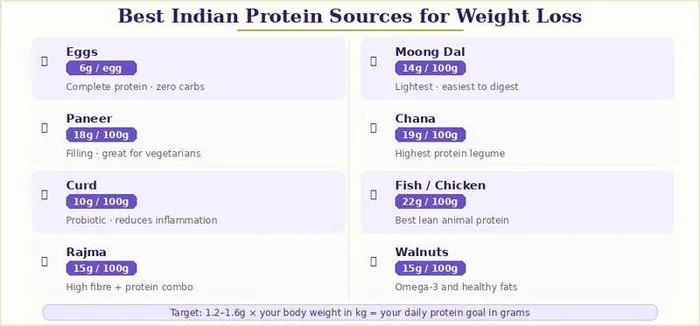
Foods That Make Dieting Harder (Avoid These)
- Diet foods & low-fat products replace fat with sugar, spike insulin without satiety
- Artificial sweeteners trigger cephalic insulin response and increase sugar cravings
- High-caffeine fat burners raise cortisol, promote fat storage around the abdomen
- Skipping dinner raises ghrelin (hunger hormone) and causes muscle loss overnight
- Packaged protein bars often contain more sugar than a biscuit; read labels carefully
Practical Action Plan: How to Stop Dieting and Start Eating Right
The Five Metabolic Repair Rules Start With Your Next Meal
Here are five evidence-based changes you can make starting from your very next meal that will shift your body from starvation mode into fat-burning mode.
Add Protein to Every Single Meal
Every meal must have a protein source. Dal, paneer, eggs, curd, sprouts, rajma. Even breakfast. This single change prevents muscle loss, reduces ghrelin by 30%, and raises your metabolism immediately. Aim for 20 to 30g of protein per meal.
Never Skip Meals. Especially Breakfast
Skipping meals is the fastest way to trigger adaptive thermogenesis and raise ghrelin. Eat 3 full meals plus 1 to 2 snacks. Consistent meal timing regulates hunger hormones and prevents the energy crashes that lead to binge eating later.
Replace Refined Carbs With Complex Carbs. Not Remove All Carbs
Removing all rice and roti suppresses thyroid function and triggers thermogenesis. Instead, switch white rice to brown rice or millet. Switch maida items to whole grain options. Keep carbs but make them complex and fibre-rich.
Add Healthy Fat at Every Meal
One teaspoon of ghee with dal or sabzi. A small handful of walnuts or almonds as a snack. One tablespoon of ground flaxseed in your morning drink. This provides the fat needed for leptin production and keeps you satisfied without hunger for hours.
Eat Enough. But Eat Smarter
Most Indian women trying to lose weight are eating between 900 and 1200 calories. This is deep in adaptive thermogenesis territory. The goal should be 1400 to 1700 calories of the right foods. More food, better food, smarter food combinations. Your metabolism will respond within 2 to 3 weeks.
The bottom line: Your body is not broken. It is responding rationally to irrational inputs. Feed it the right nutrients in adequate amounts and it will stop fighting you and start working with you. Sustainable fat loss comes from metabolic repair through proper nutrition, not from restriction and deprivation.
How to Identify Your Root Cause Before Choosing Any Weight Loss Plan
One of the biggest reasons nutrition plans fail is starting with the wrong approach for your root cause. Different conditions need completely different strategies:
- If you have PCOS or irregular periods insulin resistance is almost certainly involved. Low-GI eating, protein at every meal, and avoiding meal gaps are the priorities. Read: Insulin Resistance Complete Guide →
- If you feel tired all the time, gain weight easily and have cold hands and feet get a full thyroid panel (TSH, T3, T4). Hypothyroidism requires a specific nutritional approach that supports thyroid hormone production. Do not start a calorie-restricted diet before checking thyroid.
- If your weight gain is primarily belly fat with normal overall BMI stress and cortisol are the likely drivers. Lifestyle changes (sleep, stress management, meal timing) are as important as food choices.
- If you have tried multiple diets and nothing works long term metabolic adaptation from repeated restriction is the issue. You need a metabolic repair phase before attempting fat loss. A nutritionist assessment will tell you where your metabolism currently is and how to reset it.
I start with a detailed review of your blood reports, health history and current eating patterns before recommending anything. No two plans are the same. See all consultation plans →
Why a Personalized Diet Plan Beats a Generic One Every Time
Search "personalized diet plan" or "custom diet plan" and you'll find a lot of apps that ask your height, weight and goal, then hand back a template with your name on it. That isn't personalisation, it's a form. A genuinely personalised diet plan starts from your actual blood work, your root cause (insulin resistance, thyroid, cortisol, or straightforward under-eating), your food preferences, and your daily schedule, then builds meal timing and portions around that, not the other way round.
This is the reason two women with the same starting weight can need completely different personalised food plans. One woman's plateau is thyroid-driven and needs iodine and selenium attention alongside protein; another's is cortisol-driven from years of under-eating and needs to eat more before she eats differently. A generic personalized diet meal plan built on calories alone misses both of these every time.
अगर आप यही सब हिंदी में पढ़ना चाहें, तो वजन कम करने का सही तरीका उसी विषय पर हिंदी गाइड है।
If you want a plan built around your actual reports rather than a template, here is how a personalized diet plan is put together. You can also see consultation pricing and options → or message directly on WhatsApp to ask a question first.
Timeline for Improvement When You Stop Dieting
- Week 1–2: Energy levels stabilise. Constant hunger reduces as cortisol drops and meal frequency improves.
- Week 3–4: Bloating reduces. Sleep quality often improves. Cravings for sugar and refined carbs decrease.
- Month 2–3: Metabolism begins to recover. Fat loss (not muscle loss) becomes measurable typically 0.5–1 kg per week.
- Month 3–6: Hormonal markers improve (insulin, cortisol, thyroid function). Sustained fat loss continues without hunger.
- Month 6+: Body composition stabilises at a healthy set point. Weight maintenance becomes natural rather than effortful.
How to Gain Weight Healthily: The Same Principles, Reversed
Everything on this page has argued that eating right beats eating less. That argument holds just as firmly in the other direction, and women trying to gain weight get advice that is, if anything, worse than what dieters receive.
The standard suggestions are ghee in everything, banana milkshakes, protein powders and weight-gain supplements. What these actually produce is fat gain with no muscle, digestive discomfort, and often worsening insulin resistance in someone who was metabolically healthy to begin with. For the full breakdown, read the weight gain diet plan for India.
The goal is not to become heavier. It is to build lean tissue, which means a modest calorie surplus, genuinely adequate protein, and resistance training to give the body a reason to build muscle rather than store fat. Without the training stimulus, a surplus simply becomes fat.
Why You Might Be Underweight in the First Place
Before adding food, it is worth knowing why the weight is not there. Persistent difficulty gaining weight is often not about appetite:
Ask for TSH with free T3 and free T4, a complete blood count, ferritin, B12 and vitamin D before assuming this is simply a fast metabolism.
The Practical Approach
| Principle | What It Means in an Indian Kitchen |
|---|---|
| Eat more often, not more at once | Five to six moderate meals. A large plate you cannot finish helps nobody. |
| Increase calorie density, not volume | Nuts, seeds, ghee, coconut, dates, peanut butter, full-fat curd, more energy in the same physical volume. |
| Protein at every meal | Paneer, dal, rajma, chana, eggs, curd, chicken, fish. Roughly 1.6 g per kg of body weight when building muscle. |
| Do not fill up on liquids first | Water before meals reduces intake. Drink between meals instead. |
| Strength train | Two to three sessions weekly. This is what decides whether the surplus becomes muscle or fat. |
| Add complex carbs back | Rice, potato, banana and whole grains are useful here, the opposite of the fat-loss instruction. |
A realistic rate is roughly two to three kilograms a month. Faster than that is almost entirely fat.
How Many Calories Do Indian Women Actually Need?
The "1200 calorie diet" is the most widely circulated and most damaging number in Indian weight loss. For most adult women it sits below basal metabolic rate, the energy needed for organ function at complete rest.
| Measure | Typical Range for Indian Women | What It Means |
|---|---|---|
| BMR | 1,200–1,500 kcal | What your body burns at rest, doing nothing at all |
| Sedentary total | 1,600–1,900 kcal | BMR plus desk work and light daily movement |
| Moderately active | 1,900–2,200 kcal | Includes regular exercise or a physically active routine |
| Sensible fat-loss intake | 1,500–1,800 kcal | A modest deficit that preserves muscle and metabolic rate |
| The 1200 kcal diet | Below BMR for most women | Rapid initial loss, then metabolic adaptation and rebound |
Your body cannot distinguish a deliberate diet from a food shortage. Eat below BMR for long enough and it responds sensibly, by lowering the metabolic rate, raising hunger hormones and preserving fat while breaking down muscle for fuel. You lose weight for three weeks and then spend a year at a lower metabolic rate wondering why nothing works. This is the single most common reason Indian women plateau.
Night Shifts, Weddings and Eating Out: The Real-Life Section
Every diet plan assumes a life you do not have. Here is the version for the one you do.
If You Work Night Shifts
Your body still processes glucose on a daytime rhythm, so insulin sensitivity is lowest overnight. Eat your largest meal before the shift rather than during it, keep the 2 am meal protein-heavy and light on carbohydrate, and protect your sleep window even if it is during daylight. Blackout curtains do more for your metabolism here than any supplement.
At Weddings and Festivals
Do not arrive hungry, eat protein beforehand so you are not making decisions on an empty stomach. Fill the plate with salad and paneer or chicken first, then take what you actually want to eat. One indulgent meal changes nothing; the two weeks of guilt-driven restriction that follow it change a great deal.
Eating Out
Order a protein dish and a vegetable dish, share the bread rather than ordering one each, choose tandoori and curry preparations over fried, and drink water rather than a soft drink, sugary drinks are the largest hidden glucose load in a restaurant meal.
Frequently Asked Questions About Why Dieting Fails
Eating very little is often the primary reason weight loss stops. When you reduce calories below approximately 1200, your body activates adaptive thermogenesis a survival mechanism where metabolism slows down by 15 to 25% to match the reduced intake. Research in the New England Journal of Medicine showed that metabolism can remain suppressed for up to six years after severe caloric restriction. At the same time, severe restriction raises ghrelin (the hunger hormone) dramatically while dropping leptin (the fullness hormone), making you feel constantly hungry. Your body then holds fat as emergency fuel. The solution is counterintuitive eat more of the right foods. A minimum of 1400 to 1700 calories of protein-rich, low-glycaemic Indian foods restores metabolic rate and allows fat loss to resume within 2 to 4 weeks.
Eating less means reducing the quantity of food regardless of its nutritional quality, which triggers metabolic slowdown, muscle loss and hormonal disruption. Eating right means choosing foods that give your body the specific nutrients it needs: adequate protein to preserve muscle, complex carbohydrates that release glucose slowly, healthy fats for hormone production, and fibre for gut health and satiety in sufficient quantities to keep metabolism active. A practical Indian example: skipping meals and eating only one roti with dal is eating less. Eating three balanced meals of jowar roti, dal, egg, salad and curd throughout the day is eating right. The second approach produces more fat loss because it keeps metabolism elevated, preserves muscle and controls hunger hormones naturally.
No, skipping breakfast is counterproductive for most Indian women, particularly those with PCOS, insulin resistance or thyroid conditions. Skipping breakfast raises cortisol the stress hormone significantly in the morning. High cortisol promotes fat storage especially around the abdomen and stimulates androgen production which worsens PCOS. Skipping breakfast leads to much larger meals later in the day, which cause greater insulin spikes and fat storage. Research shows that people who eat breakfast consume fewer total calories across the day and have better insulin sensitivity. A high-protein Indian breakfast eggs, paneer paratha on jowar roti, or besan chilla with curd within 90 minutes of waking sets up stable blood sugar for the entire day and supports fat loss without triggering the hormonal stress response of fasting.
For active fat loss, Indian women need approximately 1.2 to 1.6 grams of protein per kilogram of body weight per day. For a 60 kg woman this means 72 to 96 grams of protein daily. Most Indian women consuming traditional diets get only 30 to 50 grams per day, which is insufficient to prevent muscle loss during weight loss and inadequate to keep metabolism elevated. The best Indian protein sources are eggs (6 grams each), paneer (18 grams per 100g), curd (10 grams per 100g), rajma and chana (15 grams per 100g cooked), moong dal (14 grams per 100g cooked) and chicken or fish for non-vegetarians. Spreading protein across all three meals rather than concentrating it in one meal produces better muscle preservation and satiety throughout the day.
Initial weight loss on a restrictive diet is primarily water weight and glycogen (stored glucose), not fat. The body releases approximately 3 grams of water for every gram of glycogen burned, which is why rapid initial losses of 2 to 4 kg in the first two weeks are common but misleading. Once glycogen stores are depleted, actual fat loss slows significantly. Simultaneously, the body adapts by reducing metabolic rate through adaptive thermogenesis and increasing hunger hormones. This metabolic adaptation is the primary reason weight loss plateaus at 4 to 6 weeks on most restrictive diets. To break through a plateau, the solution is not to eat even less but to increase protein intake, add strength exercise to rebuild metabolic muscle, and sometimes strategically increase overall calories for one to two weeks to reset leptin levels before resuming a moderate deficit.
Crash dieting and severe calorie restriction actually slow your metabolism, raise cortisol (stress hormone), and trigger fat storage particularly around the belly. Most Indian women fail to lose weight not because of lack of willpower, but because they are eating too little, skipping meals, or following plans not designed for Indian food habits and lifestyle. Hidden causes include insulin resistance, thyroid imbalance, high cortisol from stress, poor sleep, and nutrient deficiencies in iron and B12.
Eating regular balanced Indian meals dal, sabzi, roti, and curd at the right times, with correct portion sizes, and without skipping meals is the most sustainable approach for Indian women. Protein at every meal is critical most Indian women eat only 30 to 40 grams of protein daily when they need 70 to 90 grams. Including protein sources like eggs, paneer, moong, rajma, and curd at every meal dramatically improves fat loss while preserving muscle.
It is not Indian food that causes weight gain, it is incorrect timing, portions, combinations, and cooking methods. Roti, rice, and dal eaten correctly are excellent for sustainable weight management. The actual culprits are refined flour products like maida, excess sugar in chai and sweets, late-night eating, large dinner portions, cooking oil overuse, and packaged snacks labelled as healthy. Traditional Indian home-cooked food is actually one of the most balanced and nutritious diets in the world when prepared correctly.
Rather than counting calories, focus on eating balanced meals every 3 to 4 hours, including protein, fibre and healthy fats at each meal. Severe calorie restriction below 1200 calories causes metabolic adaptation your body burns fewer calories at rest, making long-term weight loss impossible. For most Indian women, eating 1400 to 1700 calories of the right foods leads to consistent fat loss without hunger, muscle loss, or metabolic damage.
Post-marriage weight gain is usually caused by changed meal timing, reduced physical activity, increased stress, irregular sleep, and larger portion sizes. Undiagnosed PCOS or thyroid issues can also contribute. Identifying the underlying cause is the first step before choosing a nutrition approach.
Not by themselves. Roti and rice are not the cause of weight gain. Portion size, preparation method, pairing with protein, and overall daily eating pattern matter far more. Many Indian women lose weight successfully while still eating roti and rice when protein and meal timing are corrected.
This is metabolic adaptation. When you eat less, your body reduces its calorie burn to compensate a survival response. The solution is not to eat even less. It is to eat more strategically, increase protein, and add resistance movement to raise your baseline metabolic rate.
0.5 to 1 kg per week around 2 to 4 kg per month is a sustainable, healthy rate. Faster weight loss nearly always involves muscle loss and metabolic slowdown, making it harder to maintain the loss. Slow, consistent loss with the right nutrition lasts permanently.
Weight loss is any drop in the number on the scale, whether it comes from fat, water or muscle. Fat loss is specifically the loss of stored body fat while muscle is preserved or built. Two people losing the same amount of weight can end up looking and feeling very different depending on how much of that loss was fat versus muscle, which is why body shape, strength and energy are better markers of progress than the scale alone.
Belly fat responds more to hormonal balance than to eating less alone, since it is closely tied to cortisol and insulin. Regular meals with protein at each one, avoiding long gaps between meals, managing stress and sleep, and adding two to three short resistance sessions a week does more for belly fat specifically than calorie restriction on its own, which can shrink the scale number while leaving stomach fat largely unchanged.
Yes. Most Indian staples, dal, roti, paneer, curd, rajma, chana are available in Indian grocery stores across the USA, UK, Canada, Australia and the Gulf. An Indian diet plan built around protein, complex carbs and healthy fats works exactly the same abroad as it does in India, since the underlying biology (adaptive thermogenesis, hunger hormones, muscle preservation) does not change with location. Online consultations make it possible to get a personalised Indian nutrition plan regardless of which country you live in.
Look for a certified nutritionist who offers online video consultations and builds plans specifically around Indian food available in your country of residence, rather than generic Western meal plans. Namita works with clients across India and with NRIs in the USA, UK, UAE, Canada and Australia, building personalised plans using locally available Indian ingredients and accounting for time zone differences for consultations.