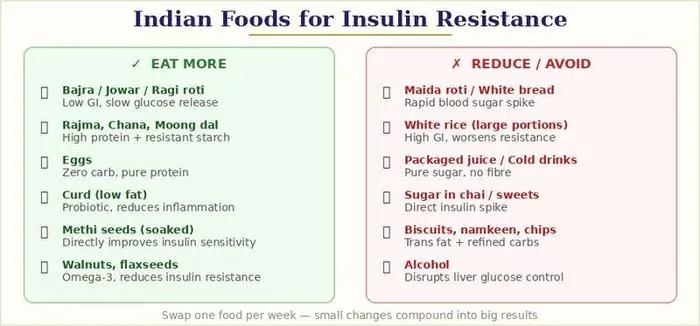
What Is the PCOS Diet, Actually?
A PCOS diet chart, sometimes searched as a PCOS food plan, isn't a generic weight-loss diet with a new label. It's a hormonal management approach built around insulin resistance, the driver behind most PCOS symptoms. That means prioritising low-glycaemic whole foods, protein at every meal, anti-inflammatory fats, and a handful of specific micronutrients (inositol, magnesium, zinc) that together restore ovulation and bring androgens back down.
Note: As of May 2026, PCOS has been officially renamed PMOS (Polyendocrine Metabolic Ovarian Syndrome) by leading medical bodies, to better reflect that it is a metabolic and endocrine condition, not just an ovarian one. This page uses the older, still widely-searched term "PCOS" for clarity, but everything below applies to PMOS as well. Read our full explainer on the PCOS to PMOS name change here.
Why PCOS Needs a Specific Diet, Not Just Fewer Calories
Insulin resistance drives roughly 65 to 70% of PCOS cases. When insulin stays elevated, the ovaries respond by producing more testosterone, periods drift out of rhythm, and fat settles around the abdomen more or less regardless of what your calorie count says. A standard low-calorie diet doesn't fix any of that, it actually makes it worse, triggering cortisol spikes and muscle loss on top of the existing problem. A PCOS diet chart targets the insulin-androgen cycle directly, through what you eat and when, not through eating less of everything.
Symptoms the PCOS Diet Is Designed to Address
- Irregular or absent periods
- Stubborn weight gain around the abdomen
- Hormonal acne on the jawline and chin
- Hair thinning or crown hair loss
- Fatigue and post-meal energy crashes
- Bloating, constipation, or gut symptoms
Insulin Resistance: The Mechanism Behind All of This
Almost everything on this page traces back to one thing: insulin resistance. Which tests to ask your doctor for, what prediabetes and type 2 diabetes actually mean on a lab report, visible signs like a dark neck or skin tags, and which supplements have real evidence behind them are all covered in full in the insulin resistance diet guide. This page stays focused on the part that's specific to PCOS: what to actually put on your plate.
Root Cause: What the PCOS Diet Chart Is Actually Targeting
The main target is insulin resistance, cells that no longer respond to insulin the way they should. Behind that sit secondary targets: chronic low-grade inflammation, androgen excess (raised testosterone and DHEA-S), and a disrupted gut microbiome. Every food recommendation in this guide is chosen to work against one or more of these, not just to shave off calories.
I have seen two women come in with the exact same PCOS diagnosis and need almost opposite plates before they actually felt better. With one client, moving breakfast toward more protein and less maida settled her energy and her skin within a few weeks. With another client I started from that same logic, protein first, steadier carbs, but not the same plan, because her gut and her digestion responded differently, and it took real trial and error with the grains and dals before her body settled into it. That is the part a printed PCOS diet chart cannot do on its own. The targets stay the same for most women, but the actual plate has to be rebuilt around the person eating from it.
Lim S.S. et al. (2019)'s Cochrane review of lifestyle interventions in PCOS confirms that dietary changes targeting insulin resistance measurably improve hormonal and metabolic outcomes, supporting a food-first approach over calorie-counting alone. Read on PubMed →
The 2023 International Evidence-Based Guideline for PCOS, developed with the American Society for Reproductive Medicine, the Endocrine Society, and ESHRE, lists nutrition-first lifestyle management as first-line treatment for all PCOS types, regardless of body weight. Read the guideline →
The PCOS Plate Formula
This is the simplest rule for building any meal, and it doesn't need a calorie count to work:
| Plate Section | What to Fill | Examples |
|---|---|---|
| ½ Plate Vegetables | Non-starchy sabzi | Bhindi, palak, gobhi, beans, tori, brinjal, shimla mirch |
| ¼ Plate Protein | Legumes, dairy, or eggs | Dal, rajma, chana, chole, paneer, dahi, eggs, tofu |
| ¼ Plate Complex Carbs | Low-GI grains | Jowar/bajra/ragi roti, small portion of brown rice |
| + Healthy Fat | Small addition | Ghee (½ tsp), walnuts, alsi (flaxseeds), coconut |
Best Indian Foods for PCOS
Methi (Fenugreek)
Trigonelline and fibre reduce fasting insulin and improve glucose tolerance. Use in rotis, dal, sabzi, or soak seeds overnight and drink the water.
Alsi (Flaxseeds)
Lignans block androgen receptors; omega-3 reduces inflammation. 1 tbsp ground daily in rotis, curd, or warm water.
Rajma & Chana
High protein + fibre + resistant starch = slow glucose release. One of the best insulin-lowering foods in the Indian kitchen.
Dahi (Plain Curd)
Probiotic that improves gut health and oestrogen metabolism. Full-fat is better the fat reduces the insulin spike from the lactose.
Walnuts
Best plant source of omega-3 in the Indian diet. Reduces inflammation and SHBG suppression, making less testosterone available.
Millets (Jowar, Bajra, Ragi)
Lower GI than wheat and white rice. Rich in magnesium which improves insulin sensitivity. Use as rotis or porridge.
Haldi (Turmeric)
Curcumin reduces inflammatory cytokines that worsen insulin resistance. Use daily in cooking + warm haldi milk at night.
Karela (Bitter Gourd)
Charantin and polypeptide-p compounds mimic insulin activity and improve glucose uptake. Highly effective for insulin resistance.
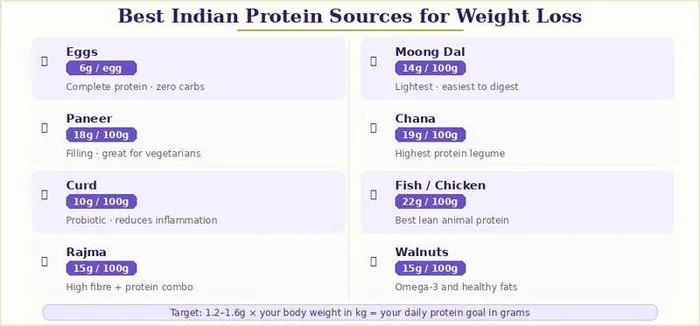
Foods to Avoid on the PCOS Diet
- Maida and refined flour: bread, naan, puri, pastries, the fastest insulin spikes on this list
- Packaged breakfast cereals: cornflakes, sugared muesli, flavoured instant oats
- Sugary drinks: packaged fruit juice, cold drinks, sweetened lassi, store-bought chai
- Trans fats: vanaspati and partially hydrogenated oils in bakery items
- Excess red meat: raises androgens and saturated fat load, limit to 1 to 2 times a week
- Excess milk: raises IGF-1 and androgens
GI Table Common Indian Foods
| Food | GI | Better Choice? |
|---|---|---|
| Ragi (finger millet) roti | Low (54) | ✅ Yes |
| Rajma (kidney beans) | Low (29) | ✅ Yes |
| Moong dal (whole) | Low (38) | ✅ Yes |
| Jowar (sorghum) roti | Low–Medium (55) | ✅ Yes |
| Brown rice | Medium (68) | 🟡 Moderate small portion |
| Chapati (wheat) | Medium (62) | 🟡 Moderate with sabzi and dal |
| White rice | High (73) | 🔴 Reduce smaller portion, add protein |
| Poha | High (76) | 🔴 Add peanuts and lemon to lower GI |
| Maida (white flour) | Very High (85) | 🔴 Avoid where possible |
| Sweet chai (with 2 tsp sugar) | Very High | 🔴 Limit to 1 cup, reduce sugar |
| Fruit juice (apple/mango) | Very High (70–80) | 🔴 Eat the whole fruit instead |
| Upma (semolina) | High (65–70) | 🔴 Add lots of vegetables; small portion |
Meal Timing Rules for PCOS
- Never skip breakfast: skipping it raises cortisol and drags insulin resistance for the rest of the day
- Eat every 3 to 4 hours: keeps cortisol from spiking the way it does with prolonged fasting
- Front-load your carbs: bigger carb portions at breakfast and lunch, smaller at dinner
- Skip intermittent fasting: even a 16:8 window measurably raises cortisol and androgens in PCOS
- Finish eating 2 hours before sleep: late meals worsen insulin resistance the next morning
PCOS Diet During Fasting Days: Navratri, Karva Chauth & Ramadan
Festival and religious fasting days are where a PCOS diet chart falls apart most often, because traditional fasting foods (sabudana, fried singhare or kuttu puris, sweetened milk) sit among the highest-GI foods in the entire Indian kitchen. The goal isn't to cut these out entirely, it's to rebuild them around protein and fat so they stop spiking insulin the way they normally would.
- Navratri or Vrat: choose roasted, not fried, kuttu or singhare ka atta chillas, and pair them with curd and roasted peanuts rather than just potato. Keep sabudana to a small portion alongside paneer or peanuts, never eaten on its own.
- Karva Chauth: break the fast with water and a small protein bite, paneer or nuts, before touching anything sweet or fried. Sugar first on an empty stomach produces the sharpest insulin spike of the day.
- Ramadan: build suhoor around protein and fibre, eggs, dahi, oats, so it actually lasts through the day, and break the iftar fast with water and a moderate portion of dates before moving on to fried items. Skip opening with pakoras or sugary drinks on an empty stomach.
Can You Eat Dates With PCOS?
Dates come up constantly, partly because they are the standard way to break a fast and partly because they get sold as the healthy sweet. For PCOS, dates are fine in moderation, they are simply concentrated sugar in a small package, so the amount and the pairing matter more than the food itself.
Two dates, not a handful, is a sensible ceiling on most days. Eat them with protein or fat, a few nuts, some curd, or a glass of milk, rather than on their own, so the sugar goes in slower. The better moments are alongside a meal or before a walk or workout, and the worst is on an empty stomach first thing in the morning or late at night. If you are using dates to replace mithai or biscuits, that is a genuine upgrade. If you are eating them on top of everything else because they are labelled healthy, that is where they start working against you.
What to Eat During Your Period on a PCOS Diet
Cravings and fatigue tend to spike during your period because progesterone drops and prostaglandins rise, that's a normal hormonal shift, not a sign you've fallen off the diet. A few adjustments help without abandoning the plate formula.
- Add iron-rich foods: rajma, chana, palak, a little jaggery, to offset blood loss, especially with heavier periods
- Lean on magnesium: til, pumpkin seeds, and dark leafy greens ease cramps and tend to take the edge off sugar cravings
- Keep meals warm and well-cooked rather than raw salads during this window, it's easier on digestion when bloating is already high
- If a craving hits, pair it with protein instead of white-knuckling through it, a small piece of jaggery alongside a handful of nuts rather than jaggery alone
Sample 1-Day Indian Meal Plan for PCOS
| Time | Meal | Why |
|---|---|---|
| 7:00 AM | Warm water + soaked methi seeds (overnight) OR spearmint tea | Starts insulin signalling; reduces morning androgens |
| 8:30 AM | 2 eggs (any style) + 1 jowar roti + small bowl dahi + 1 fruit | Protein-first breakfast prevents the morning glucose spike |
| 11:30 AM | Small handful of walnuts + 1 tsp ground alsi in curd OR a small fruit | Bridges the gap; omega-3 + lignan dose |
| 1:30 PM | 1 bowl rajma/chana/dal + 2 small jowar rotis + large sabzi + dahi | High-protein, high-fibre lunch; steady glucose until evening |
| 4:30 PM | Roasted chana OR pumpkin seeds + 1 cup chai with reduced sugar | Zinc + protein snack; prevents dinner overeating |
| 7:30 PM | Large sabzi (palak/gobhi/beans) + 1 small roti OR ½ cup brown rice + dal + salad | Lighter carb at dinner matches lower evening insulin sensitivity |
What Should a PCOS Diet Chart Look Like?
A good PCOS diet chart is not a list of forbidden foods. It is a repeatable structure you can put any Indian meal into. If you strip everything else away, a workable diet chart for PCOS does four things:
- Puts protein in every single meal, including breakfast, so blood sugar never starts the day on a spike
- Keeps the grain low-GI and portioned, jowar, bajra, ragi, or a smaller serving of brown rice, rather than cutting carbs out completely
- Fills half the plate with vegetables, which is what makes the meal filling enough that you are not hunting for a snack an hour later
- Repeats at fixed times, roughly every 3 to 4 hours, because timing steadies insulin as much as the food itself does
Everything in the 7-day PCOS diet chart below is just that same structure rotated across different Indian meals so the week does not get boring.
Simple PCOS Meal Plan for Beginners
If the full chart feels like too much to start with, start with a simple PCOS meal plan and change one meal at a time. This is the version I give someone in their first week:
- Breakfast: eggs, besan chilla, or paneer with one jowar roti. Fix breakfast first and the rest of the day gets easier on its own.
- Lunch: dal or rajma, one or two millet rotis, a large sabzi, and curd. Keep this the same most days at the start.
- Evening snack: roasted chana, makhana, or a handful of nuts, so you are not ravenous at dinner.
- Dinner: lighter and earlier, a big sabzi with dal and one roti, finished about 2 hours before bed.
Stay on that for two weeks before adding the variety in the full PCOS meal plan below. Most people who quit a PCOS diet chart quit because they tried to change seven meals on day one.
7-Day PCOS Diet Chart for Indian Women (Quick Overview)
| Day | Breakfast | Lunch | Dinner |
|---|---|---|---|
| Mon | Besan chilla + curd | Rajma + jowar roti + sabzi | Moong dal + roti + salad |
| Tue | Egg bhurji + 1 roti | Chana + brown rice + sabzi | Palak paneer + roti |
| Wed | Oats idli + sambar | Rajma + bajra roti + salad | Lauki sabzi + dal + roti |
| Thu | Paneer paratha + curd | Soya chunks curry + rice + salad | Mixed veg + roti |
| Fri | Moong dal dosa + chutney | Kidney beans + jowar roti + sabzi | Paneer bhurji + roti |
| Sat | Vegetable poha + nuts | Chickpea salad + roti + sabzi | Dal + brown rice + salad |
| Sun | Egg/paneer sandwich (multigrain) | Rajma + roti + raita | Light khichdi + vegetables |
This is a starting framework. For a fully personalised 7-day plan built around your blood reports and food preferences, book a consultation.
PCOS Diet Lunch Box Ideas for Working Women
The real reason a PCOS diet chart falls apart on workdays usually isn't willpower, it's a tiffin that turns soggy, smells too strong for a desk, or can't survive 4 to 5 hours without a fridge. These combinations are built to actually hold up.
- Dal, roti, and dry sabzi: skip wet curries in the lunch box, dry-style bhindi, gobhi, or beans keep their texture and don't leak
- Rajma or chana chaat with curd on the side: keep the curd separate and mix it in at lunchtime so the box doesn't go watery by noon
- Paneer or egg bhurji wrapped in jowar or multigrain roti: protein-forward and still good at room temperature
- Roasted chana or makhana as the desk-drawer snack: replaces the 4 PM vending machine biscuit that spikes insulin right before the commute home
Non-Vegetarian PCOS Diet: Chicken, Fish & Egg Variations
The plate formula stays identical for a non-vegetarian PCOS diet, the protein quarter simply comes from chicken, fish, or eggs instead of dal or paneer on those days. Fish is the strongest non-veg choice for PCOS thanks to its omega-3 content, which lowers inflammation and supports SHBG, the protein that keeps testosterone bound up and inactive.
| Protein | Best For | How to Use It |
|---|---|---|
| Fish (rohu, mackerel, sardines) | Omega-3, lowest inflammatory load | 2–3 times a week, grilled or curry with minimal oil, pairs with brown rice or jowar roti |
| Chicken (skinless) | Lean protein, versatile | 4–5 times a week is fine; grilled, tandoori, or home-style curry over fried preparations |
| Eggs | Complete protein, cheapest daily option | 1–2 whole eggs daily is safe for most women; bhurji, curry, or boiled with a jowar roti |
| Mutton / red meat | Iron, but higher androgen and saturated fat load | Limit to 1–2 times a week; balance with extra vegetables and fibre at the same meal |
| Prawns | Lean protein, occasional variety | 1–2 times a week, avoid deep-fried preparations |
A simple non-veg swap: replace the 1:30 PM dal in the sample meal plan above with a fish or chicken curry cooked in minimal oil, keeping the sabzi, roti, and dahi as they are. The plate ratio, half vegetables, a quarter protein, a quarter low-GI carb, doesn't change either way.
PCOS Diet by Region: South Indian, Punjabi, Bengali & Gujarati
The PCOS plate formula travels well across any regional Indian cuisine, only the grains, dals, and cooking styles need to adapt. Here's how it plays out in four common regional kitchens.
South Indian
Swap idli/dosa batter to include ragi or millet flour, favour sambar (lentil-rich) over plain chutney, use coconut in moderation, and pair every tiffin item with a protein side like curd or a boiled egg rather than eating it alone.
Punjabi
Choose makki, bajra, or multigrain roti over refined-flour naan and paratha, go easy on ghee-heavy tadkas, and favour rajma, chole, and saag paneer, which are already close to the PCOS plate formula, over cream-based curries.
Bengali
Fish (a Bengali staple) is one of the best PCOS proteins keep it steamed, curried, or grilled rather than deep-fried, choose brown or parboiled rice in a smaller portion, and add more mustard-cooked greens (shaak) for fibre.
Gujarati
Watch added jaggery and sugar in dals and sabzis, favour the naturally protein-rich thali components (kathol, dal, khichdi) over fried items like fafda and gathiya, and keep khakhra as an occasional snack, not a daily staple.
Download the PCOS Diet Chart PDF
Get the full 7-day PCOS diet chart, the GI food list, and the plate formula from this guide as a single printable PDF you can stick on your fridge or kitchen shelf. Download the PDF →
Timeline for Improvement on the PCOS Diet
In the first one to two weeks, energy tends to improve and bloating and post-meal crashes ease off. By weeks four to six, skin often starts clearing, cravings settle, and fasting insulin begins to drop. By months two to three, period regularity can start returning and androgen markers on blood tests move in the right direction. By months four to six, full hormonal normalisation is realistic with consistent follow-through, though the pace depends on your root cause type and how severe things were to start with.
When to Seek Professional Help
If you've followed a structured PCOS diet chart for 8 to 12 weeks with no real change in period regularity, energy, or symptoms, it's worth booking a personalised nutrition consultation. You may be dealing with a specific root cause type, adrenal, post-pill, or thyroid-driven PCOS, that needs a more targeted approach than general guidelines can offer. If thyroid is the part that keeps coming up, the thyroid diet plan guide goes through it meal by meal. A blood panel covering fasting insulin, HOMA-IR, AMH, and a full hormone panel will clarify exactly which type you're working with.
Frequently Asked Questions: PCOS Diet
The best PCOS diet for Indian women targets insulin resistance through low-GI whole grains (ragi, jowar, bajra), adequate protein (dal, paneer, curd, eggs), anti-inflammatory foods (methi, haldi, karela), and healthy fats (ghee, walnuts, flaxseeds). Avoid refined flour, packaged snacks, sugary drinks, and large portions of white rice.
Yes several traditional Indian foods are scientifically proven to reduce insulin resistance and androgen levels. Methi (fenugreek), haldi (turmeric), karela (bitter gourd), alsi (flaxseeds), and rajma (kidney beans) all have specific evidence. A structured Indian meal plan built on these foods can significantly improve PCOS symptoms within 8–12 weeks.
A 7-day PCOS diet plan for Indian women rotates low-GI grains (ragi, jowar, bajra, brown rice) across the week, keeps a protein source at every meal (dal, paneer, eggs, curd), and varies vegetables and pulses daily to avoid monotony while keeping insulin response stable.
An Indian PCOS diet chart maps out meal timing, portion sizes, and food choices across breakfast, mid-morning, lunch, evening snack, and dinner, replacing refined flour and white rice with low-GI alternatives like jowar, bajra and ragi, and adding protein and anti-inflammatory staples like turmeric and methi to every meal.
Yes. A vegetarian Indian PCOS diet plan can be as effective for weight loss as a non-vegetarian one, provided protein comes from adequate sources like dal, paneer, curd, soy, and eggs, combined with low-GI grains and fibre-rich vegetables. The main driver of PCOS weight loss is managing insulin resistance through food choice and timing, not whether the diet is vegetarian.
Yes. As of May 2026, PCOS (Polycystic Ovary Syndrome) was officially renamed PMOS (Polyendocrine Metabolic Ovarian Syndrome). The condition itself hasn't changed only the name has, to better reflect that it's a metabolic and hormonal condition involving insulin resistance, not primarily an ovarian cyst condition. Everything in this diet guide applies whether you call it PCOS or PMOS.
Yes, with a few swaps. Choose roasted instead of fried fasting foods, pair sabudana or singhare ka atta with curd or peanuts rather than eating them alone, and avoid starting the meal with anything sweet on an empty stomach. See the full fasting day guide above for Navratri, Karva Chauth, and Ramadan specifically.
Lean on iron-rich foods like rajma, chana, and palak, add magnesium-rich foods like til and pumpkin seeds for cramps and cravings, and favour warm, well-cooked meals over raw salads while bloating is high. See the eating during periods section above for the full breakdown.
Dry-style sabzi instead of wet curries, a protein-forward filling like paneer or egg bhurji in a jowar roti, and curd packed separately so the box doesn't go watery by lunchtime all travel well and hold up for a 4-5 hour workday. See the lunch box ideas section above for more combinations.
PCOS mein ragi, jowar, bajra, dal, paneer, curd aur hari sabzi khayen. Maida, safed chawal zyada matra mein, packaged namkeen aur meethi cheezein kam karein. Har meal mein protein zaroor rakhein taaki insulin stable rahe.
Ragi (finger millet) has a lower glycemic index than wheat and is higher in fibre and calcium, making it a strong everyday roti choice for PCOS. Rotating ragi with jowar and bajra through the week gives better blood sugar control than wheat alone.
Yes, plain curd/yoghurt is a good PCOS food. It's a fermented, protein-rich dairy that's better tolerated than milk (which can raise IGF-1), and its probiotics support gut health which is increasingly linked to better insulin sensitivity.
Yes, in moderation. The concern isn't tea itself but the sugar and milk quantity. Cutting sugar, or swapping 1-2 cups a day for spearmint tea, is a small change that supports insulin and androgen balance without giving up the habit entirely.
Cumin (jeera) water, ajwain, buttermilk (chaas), and cooked rather than raw vegetables ease bloating for many women with PCOS. Reducing maida, carbonated drinks and very large meals also helps, since gut inflammation and insulin resistance are closely linked.
The best PCOS diet plan for weight loss combines low-GI Indian grains, a protein source at every meal, and consistent meal timing to keep insulin stable, since insulin resistance drives most PCOS-related weight gain.
A diet chart for a PCOD patient should map every meal around low-GI grains, adequate protein, and anti-inflammatory foods like methi and haldi, while limiting refined flour, sugar, and large portions of white rice.
An online PCOS diet consultation typically starts with a review of your blood reports and current eating pattern, so the plan is built around your specific PCOS type rather than a generic chart.
Yes. Swap the protein quarter of the plate for fish, skinless chicken, or eggs instead of dal or paneer. Fish 2-3 times a week is the strongest non-veg choice for PCOS because of its omega-3 content; limit red meat to 1-2 times a week. See the non-veg variations section above.
Yes, the PCOS plate formula adapts to any regional cuisine. South Indian: use ragi or millet in dosa/idli batter and pair with a protein side. Punjabi: choose bajra or multigrain roti over naan. Bengali: lean on fish and mustard greens. Gujarati: watch added jaggery in dals and favour thali items over fried snacks. See the regional variations section above.
The full 7-day PCOS diet chart, GI food list, and plate formula from this guide are available as a free printable PDF. Download it here.
Generally no. Even a 16:8 intermittent fasting window can raise cortisol and androgens in women with PCOS. Eating every 3-4 hours with a protein-first breakfast is usually more effective for insulin stability than extended fasting windows.
There is no fixed calorie number for PCOS. The plate formula (half vegetables, a quarter protein, a quarter low-GI carbs, plus a small healthy fat) manages insulin through food composition and timing, which matters more for PCOS than calorie counting alone.
A PCOS diet chart should be a repeatable structure rather than a list of banned foods: protein in every meal including breakfast, a portioned low-GI grain like jowar, bajra or ragi, half the plate as vegetables, and meals roughly every 3 to 4 hours. The 7-day chart in this guide is that same structure rotated across different Indian meals.
Start with one fixed day and repeat it: a protein breakfast such as eggs, besan chilla or paneer with a jowar roti, a lunch of dal or rajma with millet roti, sabzi and curd, a small evening snack of roasted chana or nuts, and a lighter early dinner. Stay on that for two weeks before adding variety.
Yes, in moderation. Keep it to about two dates, eat them with nuts, curd or milk rather than on their own, and prefer them alongside a meal or before activity instead of on an empty stomach or late at night. They work well as a swap for mithai or biscuits, less well as an extra on top of everything else.
Yes. This plate formula works with whatever Indian staples you can find abroad, dal, paneer, curd, and low-GI grains like ragi or jowar are stocked in most Indian grocery stores across the US, UK, Canada, Australia and the Gulf. If something isn't available where you live, it can be swapped for a local equivalent without changing the plan's logic. Online consultations make it possible to build this out with a nutritionist wherever you live.
Yes. A PCOS fertility diet uses the same PCOS Indian diet principles in this guide, protein at every meal, low-GI grains, and steady meal timing, because bringing insulin down is usually what helps ovulation become more regular. Folate-rich foods like palak, rajma and chana are worth extra attention while trying to conceive, alongside the plate formula and 7-day chart above.
PCOS Diet Chart, Hindi Mein Quick Summary
Agar aap soch rahi hain "PCOS me kya khaye kya na khaye", to seedha jawab hai: apni plate mein ragi, jowar, bajra jaise low-GI anaj, dal-paneer-curd jaisa protein, aur methi-haldi jaise anti-inflammatory masale zaroor rakhein. Maida, safed chawal (zyada matra mein), packaged namkeen aur meetha kam karein.
Vajan kam karne ka sahi tarika calorie kam karna nahi, balki sahi combination mein khana hai, har meal mein protein aur fibre insulin ko stable rakhte hain, jisse weight loss consistent hota hai.
Poora 7-day plan upar diya gaya hai. Kisi bhi sawaal ke liye WhatsApp par Namita se baat karein.
📖 Explore More PCOS Topics
Each guide in this series covers one specific piece of PCOS in depth: symptoms, root causes, Indian food strategies, and what to actually do next.
PCOS Weight Loss
Why diets fail and the insulin-first approach that actually works.
Read Guide → SkinPCOS & Acne
Hormonal jaw acne, androgen connection, foods that clear skin.
Read Guide → HairPCOS Hair Loss
Crown thinning, DHT, and nutritional interventions for regrowth.
Read Guide → CyclesIrregular Periods & PCOS
How to restore cycle regularity and understand anovulation.
Read Guide → Lean PCOSLean PCOS Guide
PCOS in thin women adrenal-driven type, different approach.
Read Guide → InsulinInsulin Resistance Hub
The full guide to IR the root cause behind most PCOS symptoms.
Read Guide → Weight ScienceWhy Dieting Isn't Working
Why cutting calories doesn't fix PCOS weight and the hormone-first food approach that does.
Read Guide → Bone HealthOsteoporosis in Indian Women
Calcium-rich Indian foods and how PCOS affects bone density over time.
Read Guide → Blood SugarDiabetes Diet Plan India
What to eat for blood sugar control, and how diabetes connects back to insulin resistance.
Read Guide → Hindiइंसुलिन रेजिस्टेंस (हिंदी)
The same insulin resistance guide, in Hindi.
Read Guide → Storyनमिता की कहानी
Namita's own insulin resistance story, in Hindi.
Read Guide → StoryMy Insulin Resistance Story
Namita's own experience with insulin resistance, in her words.
Read Guide → HindiPCOS क्या है (हिंदी)
PCOS symptoms, types and the Indian diet approach, in Hindi.
Read Guide → Main GuidePCOS Complete Guide
The full pillar guide covering all PCOS types, causes and the Indian diet approach.
Read Guide → PMOSPCOS Renamed to PMOS
What the May 2026 rename means, and what does not change for your care.
Read Guide → ThyroidThyroid Diet Plan India
What to eat when an underactive thyroid is making weight and energy harder.
Read Guide → Hindiवजन कम करें, सही तरीका
Weight loss, in Hindi, with hormones and food explained together.
Read Guide → Weight GainWeight Gain Diet Plan
For men and women who stay thin, and why lean PCOS needs a careful approach.
Read Guide →